
 Shop
Shop My
My Custom




FREE 5-Ingredient Recipe EBook
GET IT NOWMy Salmon Steak Recipe Is Flaky, Buttery, And Cheesy

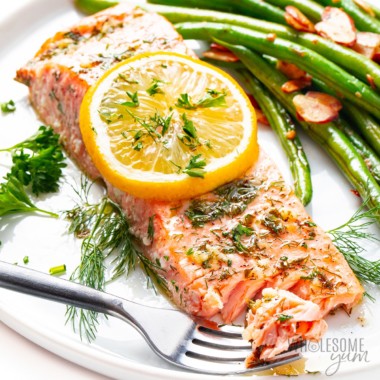
I’ve cooked salmon fillets a million different ways, but the idea of salmon steak took some getting used to. I was a little unsure about the whole bone-in thing. Now I see why people get these — they turned out a lot more moist and flavorful than fillets. Here’s why I loved this salmon steak recipe:
- More moist and tender than a fillet – I’m a big fan of baked salmon fillets, but bone-in salmon steaks cook more slowly and evenly, for literally the moistest, flakiest fish I’ve ever had. It’s similar to the effect I’ve experienced many times with bone-in steaks and chicken.
- Buttery, garlicky, cheesy flavor – This dish has the richness of herby butter, a crisp sear, and a cheesy topping that gets golden under the broiler. Total restaurant vibes, right from my kitchen! If you like my broiled salmon fillets and pan seared salmon, this is like the best of both.
- Ready in 20 minutes – Cooking salmon steaks turned out so much quicker and easier than I anticipated! Even with this large cut, my stovetop-to-broiler method is just as fast as baking fillets.
- Affordable – I was pleasantly surprised to find that salmon steaks cost less than fillets in my area. It’s probably for the same reason that chicken quarters are cheaper than separate legs and thighs — less processing, and I guess some people don’t want them. (They’re missing out.)
I served these salmon steaks as a healthy weeknight dinner for my family, as most of my recipe testing tends to go. But I could definitely see these being special enough for date night, hosting, or even holidays. Make them with me!

Ingredients & Substitutions
Here I explain the best ingredients for my salmon fish steak recipe, what each one does, and substitution options. For measurements, see the recipe card.
- Salmon Steaks – I get these at the seafood counter. Sometimes I only find them frozen and have to thaw before cooking. They’re cut across the fish, so they have an oval shape and a bit of bone. I really like that unlike whole bone-in fish, the spine bones in salmon steaks are concentrated in the center, so they’re actually very easy to eat. I recommend steaks at least 1 inch thick, so they don’t overcook before the topping browns.
- Herb Butter – I just mash unsalted butter with fresh herbs, parsley and thyme. I chose these simply because I had them. Feel free to use any herbs you’ve got, like dill or chives.
- Garlic Powder – I tested this recipe using both garlic powder on the fish and just putting minced garlic (2 cloves) into the herb butter. You can do either, but I found the garlic taste was more evenly distributed with the garlic powder.
- Grated Parmesan Cheese – I grated it fresh this time so it turned out more shredded (see picture below), but more often I get the powdered kind in a can because it’s more similar to breadcrumbs. It adds that salty, cheesy crust that crisps up.
- Lemon Wedges – For a zesty finish. I always have to have lemon with my fish!
- Sea Salt & Black Pepper

How To Cook Salmon Steaks
I have step-by-step photos here to help you visualize the recipe. For full instructions with amounts and temperatures, see the recipe card.
- Season the fish. Pat the salmon steaks dry with paper towels, which helps them get a nice sear. Sprinkle both sides with sea salt, black pepper, and garlic powder.
- Make the herb butter. In a small bowl, mash together the butter and fresh herbs with a fork. Keep it nearby, so it’s ready when you need it.


- Sear the salmon. Heat the olive oil in a large cast iron skillet. I look for it to slide around the pan easily. Add the salmon steaks and sear on both sides, until golden and crusty.
- Add the toppings. Quickly dollop the herb butter on top of the fish and spread as it starts to melt. Sprinkle the parmesan on top.
- Broil. Pop the salmon steak under the broiler, until the cheese is browned and the salmon is cooked through. I always finish with a squeeze of fresh lemon juice!



My Tips For Flipping & Flaky Results
- You’ll need a very large skillet to fit all 4 salmon steaks, and I recommend cast iron. I use this one. It gives my salmon steaks a beautiful sear, doesn’t require seasoning the pan (always yes to easy maintenance!), and is oven-safe for the broil step.
- A fish spatula is more important than ever here. I have and love this fish spatula, which I can pry under the fish easily and is large enough. Salmon steaks are big and heavy, so a larger tool helps, plus a thicker turner is harder to get underneath.
- Don’t move the salmon steaks around, except to flip. Not only does moving them prevent that gorgeous crust from forming, they stuck and fell apart when I moved them too early.
- Don’t flip too soon. Again, that pesky sticking! As long as your pan is well coated in oil, the fish should release once it forms a crust underneath — but before this point, it won’t.
- Be careful with the hot oil. The first time I made these, I thought I needed 2 tablespoons of oil, and it splattered all over me while flipping. Not a fun moment and took weeks to heal! This doesn’t happen as easily with the 1 tablespoon I have in my final recipe, but I still recommend standing further back when you flip, just in case.
- To prevent overcooking, work fast to add the herb butter and parmesan after flipping. I do it in the last minute of searing on the other side, but you can start earlier if you’re concerned it will take you longer. The goal is to transfer the fish to the oven quickly to broil the top before it overcooks.
- Use a meat thermometer for perfect doneness. I actually insert this probe thermometer right before transferring to the oven, so I know exactly when it hits the right temperature. I recommend 135-140 degrees F for moist, flaky salmon, but you can do 145 if you like it more firm. If you don’t have a thermometer, you can test that it flakes easily with a fork and still looks moist.
- What if your fish is at the right temperature before broiling? This can happen if your salmon steaks are thin (that’s why I recommend thick ones) or you take too long transferring the pan to the oven. At that point I would probably just choose the correct fish doneness over browned cheese, but it’s up to you.
- Remove the fish from the pan right away. Otherwise, it will continue to cook from the residual heat. (You know I’m always going on about this with steaks, but it’s true for fish, too!)
- How do you eat salmon steak? This recipe turns out so tender that I just flake the fish away with a fork, knowing that the bone is in the middle. If you really want to, you can cut down the sides of the bone, which is in the center. Sometimes I go with this option when I share my salmon steak with one of my kids — they’re quite large, so often big enough to share!
Salmon Steak
My salmon steak recipe has a golden sear, garlic herb butter, and crispy parmesan crust. Make it in just 20 minutes!
 Remove Ads

Instructions
Tap on the times in the instructions to start a kitchen timer.
-
Preheat the oven to Broil on High. Pat salmon steaks dry with paper towels. Season both sides with sea salt, black pepper, and garlic powder.
-
In a small bowl, use a fork to mash together the butter, parsley, and thyme. Set aside near the stove.
-
Heat the olive oil in a very large cast iron skillet over medium-high heat, until it slides around easily and coats the pan. Add the salmon steaks in a single layer. Sear for about 3 minutes, until a golden crust forms on the bottom.
-
Use a fish spatula to carefully flip the salmon steaks. Sear for 2 minutes on the other side.
-
Working quickly, add the butter over the fish in dollops, then spread as it starts to soften from the heat. Sprinkle the grated parmesan cheese on top.
-
Immediately transfer the salmon steaks to the oven, 6 inches from the broiler. Broil for 1-3 minutes, until the fish reaches an internal temperature of 135-140 degrees F (57-60 degrees C). Serve with lemon wedges if you like.
LAST STEP: Leave a rating to help other readers, or tag me @wholesomeyum on Instagram. I’d love to hear from you!
Maya’s Recipe Notes
Serving size: 1 salmon steak
- Tips: Check out my recipe tips above to help you flip salmon steak more easily, and get the perfect sear with a flaky inside.
- Storage: Keep leftovers in an airtight container in the refrigerator. They’ll stay fresh for up to 2-3 days, or you can repurpose them to make my salmon patties.
- Meal prep: You can make the herb butter ahead of time and store it in the fridge. I do recommend cooking salmon steaks fresh.
- Reheat: I usually pop these in the air fryer to reheat, but the oven works, too. Like all fish, microwaving isn’t great because it dries it out.
I provide nutrition facts as a courtesy. Have questions about calculations or why you got a different result? Please see my nutrition policy.
Add Your Notes Your Notes
Try More Of My Recipes



© Copyright Maya Krampf for Wholesome Yum. Please DO NOT SCREENSHOT OR COPY/PASTE recipes to social media or websites. We’d LOVE for you to share a link with photo instead.
Salmon Steak

How I Serve These
I usually serve salmon steak with a simple veggie side dish, like these:
- Vegetables – My go-to options are air fryer asparagus or air fryer brussels sprouts, because I can cook them in parallel. Since this salmon steak recipe needs both my stove and my oven, it’s harder to make a side on those at the same time. You can definitely roast asparagus in the oven after broiling the fish, though.
- Salads – I love a fresh salad to balance the richness of the fish, like tangy cucumber onion salad, creamy avocado Caprese salad, or peach salad when I want a little sweetness.
- Starches – This dish usually leaves a little sauce at the bottom of the skillet, which is perfect for drizzling over air fried potatoes, root vegetables, or mashed cauliflower.










2 Comments
Juli Durr
0Can you cook the salmon steak in the air fryer?
Maya | Wholesome Yum
0Hi Juli, I’m sure you can, but I’ve only tested the method I have outlined here. I prefer it because it gives me that golden crust. If you try the air fryer, please let me know how it turns out.