
 Shop
Shop My
My Custom





FREE 5-Ingredient Recipe EBook
GET IT NOWI get questions about substitutions in my healthy recipes a lot. And I get it! Whether you have a food restriction, allergy, or are simply out of something, sometimes you need an alternative. That’s one of the reasons that the longest section in my posts is usually the ingredients & substitutions section. I’m always here with options. And since one of the most common requests I get is for an egg substitute, I created this guide to summarize all the best options for you. These egg alternatives will help you seamlessly replace eggs – and I’ll explain how to choose which one to use for your needs!
What Eggs Do In Baking
To use egg substitutes for baking, first you need to understand what they do… which is a lot. Let me explain:
- Structure – I find this is the hardest part to replicate, but it’s possible. The proteins in eggs act like glue to give shape to baked recipes, preventing them from falling apart.
- Leavening – That’s a fancy way to say they help with rising and lightness by creating air pockets.
- Moisture – They help with a moist texture. Most baked goods will be dry without them if you don’t compensate with something else.
- Thickening – When heated, the proteins thicken batters and doughs.
- Emulsifying – This means helping bind together oil and water, for a smoother texture in breads and cakes.
- Flavor – Don’t get me wrong, nobody wants an eggy flavor! But in the right amount, eggs actually improve the taste of baked goods.
- Nutrition – Eggs are packed with vitamins and minerals, as well as protein (source from the USDA).
- Color – This is why I sometimes use an egg wash! But even without it, eggs give many baked goods a pretty golden hue, thanks to the yolks.


15 Best Egg Substitutes For Baking
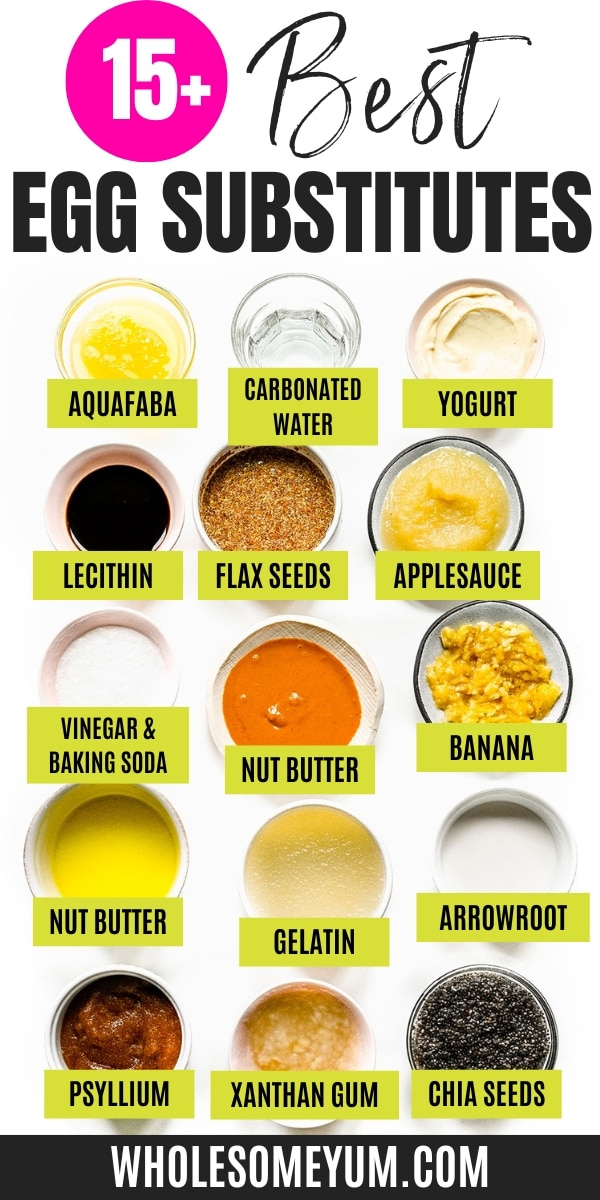
Need to replace eggs with something else? I’ve tested and compiled this list of 15 egg substitutes to help you pick the best one for your recipe!
I haven’t found any good homemade egg substitutes for dishes that are primarily eggs, such as quiches, frittatas, scrambled eggs, baked eggs, or egg muffins. You’re better off picking up a commercial product for those. But if you’re baking brownies, cakes, muffins, pancakes, or the like, many of these will work!
Flaxseed Meal
I make a flaxseed egg substitute (sometimes called a flax egg) from finely ground flaxseed and water. It’s a great binder and is almost as versatile as eggs to bind ingredients and add moisture. But, I do find that it provides less structure and no leavening. Your baked goods may have a nuttier taste, too, which I don’t think is a bad thing in many cases.
- What kind to use: I highly recommend golden flaxseed meal, as it has a more neutral flavor, but regular brown flaxseed meal will work.
- How to use it: To use flaxseed meal as an egg substitute in baking, mix 1 tablespoon of flaxseed meal with 3 tablespoons of hot water and allow it to sit for 10 minutes. Simple!
- How much to use: 1 large egg = 1 tbsp flaxseed meal + 3 tbsp water
- Best for: Cookies, muffins, cupcakes, breads, brownies, pancakes
- Not ideal for: Cakes, soufflés, meringue, custard

Chia Seeds
These seeds work similarly to using flaxseed meal as an egg alternative. Their binding power is stronger than flax, so I use them when I need the strongest binder.
- What kind to use: You can use whole chia seeds or ground chia seeds. I prefer the ground version, because it’s more easily absorbed into other ingredients, whereas whole seeds may remain visible (and noticeable in texture) in your baked goods.
- How to use it: Mix 1 tablespoons of chia seeds with 3 tablespoons of water and let the mixture sit until it becomes a thick gel. (It will be thicker and more goopy than a flax egg — this is normal!)
- How much to use: 1 large egg = 1 tbsp chia seeds (whole or ground) + 3 tbsp water
- Best for: Pancakes, muffins, cupcakes, brownies, cookies, cakes
- Not ideal for: Bread, pastries, meringue, custard

Applesauce
Applesauce shines in its ability to provide moisture. It does provide a little structure, but not a lot — and definitely no leavening. When I use applesauce as an egg substitute, my baked goods usually turn out dense, but very moist and delicately sweet.
- What kind to use: Get unsweetened apple sauce to avoid having to make too many changes to your recipe. In most cases, I recommend a smooth one rather than a chunky one.
- How to use it: Replace each egg with 1/4 cup of unsweetened applesauce. To help with lift, and depending on the recipe, you can add some baking powder in addition to the applesauce. I usually start with 1/2 teaspoon of baking powder for every 1/4 cup of applesauce.
- How much to use: 1 large egg = 1/4 cup unsweetened applesauce + (optional) 1/2 tsp baking powder
- Best for: Quick breads, muffins, cupcakes, and pancakes
- Not ideal for: Savory recipes, custard, pie crusts, cakes, meringue
Pumpkin puree can also work as an egg substitute in baking, and will work similarly to applesauce. Obviously, I only use this when I don’t mind the finished dish having some pumpkin flavor!

Mashed Banana
Bananas make an excellent binder. Since they’re very sweet, your finished food will also be sweeter. But like many other egg substitutes on my list, they won’t provide structure or work as a leavening agent.
- What kind to use: Make sure your bananas are ripe. I actually like to use over-ripe bananas for baking!
- How to use it: Mash 1 ripe banana and use in place of 1 egg.
- How much to use: 1 large egg = 1/4 cup mashed banana (this is about 1 small banana, or 1/4 to 1/2 of a medium to large one, but I recommend measuring!)
- Best for: Muffins, cakes, cupcakes, breads, pancakes, and waffles
- Not ideal for: Savory recipes, cookies, pastries, pie crust, meringue, souffles

Carbonated Water
Be careful with this one, because it only works in certain situations! Carbonated water can add moisture and the fizzy texture will help your cake batter rise, but it obviously won’t help with structure or binding. It can also throw off the wet/dry balance. I only use it when a recipe calls for multiple eggs, and use another egg alternative for at least some of them.
- What kind to use: Any unsweetened carbonated water will work.
- How to use it: Substitute 3 to 4 tablespoons carbonated water for every egg. As an optional step to help with lift, you can add 1/2 tablespoon baking powder.
- How much to use: 1 large egg = 1/4 cup carbonated water + (optional) 1/2 tbsp baking powder
- Best for: Cakes, muffins, cupcakes, and quick breads
- Not ideal for: Cookies, pastries, pie crust, custard, meringue

Aquafaba Egg Substitute
This is probably the best egg substitute of all, from the liquid inside of canned chickpeas (a.k.a. garbanzo beans). It’s also vegan if that matters to you. Aquafaba is truly unique because it acts as both a binder and a leavener, and helps with structure. It doesn’t provide much moisture though (despite being liquid itself), so I usually add some extra liquid of another type to my recipes to compensate.
- What kind to use: As I mentioned above, the easiest way to get aquafaba is to use the liquid from a can of chickpeas. For baking, I use the kind with no added salt. You can also make your own by soaking and cooking dry chickpeas, then boiling and reducing the soaking liquid until it’s thick (too much work for me, lol!).
- How to use it: Substitute 3 tablespoons of aquafaba for each egg, and you may need to add other liquid to the recipe to prevent dryness.
- How much to use: 1 large egg = 3 tbsp aquafaba
- Best for: Meringue, souffles, custard, mousse, sauces thickened with egg
- Not ideal for: Cakes, brownies, muffins, cupcakes

Arrowroot Powder
Arrowroot powder provides structure, moisture, and leavening — triple win! Since it’s a starch, though, I find that this egg alternative makes my baked goods more dense, even after mixing it with water.
- What kind to use: Any kind will work. It may be labeled “arrowroot powder” or “arrowroot starch”. I really like this brand.
- How to use it: Mix 2 tablespoons of arrowroot powder with 3 tablespoons of water to form a thick paste. Then, whisk the paste into your recipe in place of eggs.
- How much to use: 1 large egg = 2 tbsp arrowroot powder + 3 tbsp water
- Best for: Cookies, cakes, brownies, pastries, muffins, cupcakes
- Not ideal for: Custard, meringue
Tapioca starch (sometimes called tapioca powder or tapioca flour) or potato starch will also work similarly to arrowroot as a substitute for eggs in baking. I find that tapioca is more “stretchy”, so is slightly better for structure, but arrowroot is more light. Arrowroot is also a common cornstarch substitute, so most likely cornstarch would work in a similar way.

Nut Butter
I like using nut butters for moisture and extra flavor, but they definitely leave a more dense result. And they don’t create any lift at all. They do make my cookies more chewy, though, so that’s a plus.
- What kind to use: Almond butter, peanut butter, or any variety of smooth nut butters will work. Some are more runny and some are more firm, so this can affect the texture of the final result a bit. In most cases, I recommend avoiding crunchy varieties, unless you think that will somehow be ideal for your recipe.
- How to use it: Use 3 tablespoons of nut butter for each egg you’re replacing.
- How much to use: 1 large egg = 3 tbsp creamy nut butter
- Best for: Cookies, brownies, quick breads
- Not ideal for: Cakes, pastries, meringue, custard

Vinegar & Baking Soda
Vinegar and baking soda can be a good option for moisture and leavening, where structure is less important (they won’t do that part). They’ll react together to create plenty of lift, essentially similar to what baking powder does, but with added moisture.
- What kind to use: Any kind of vinegar will work, but typically I recommend white vinegar or apple cider vinegar, since their flavor won’t be noticeable in sweet recipes. I prefer this apple cider vinegar with the mother, for its nutrition.
- How to use it: Mix 1 tablespoon of vinegar with 1 teaspoon of baking soda. Then, whisk the mixture into your recipe. Make sure to bake right away, as they will start to react and will lose effectiveness if you let the batter sit.
- How much to use: 1 large egg = 1 tsp baking soda + 1 tbsp vinegar
- Best for: Muffins, cakes, cupcakes, quick breads
- Not ideal for: Cookies, pastries, meringue, custard

Oil, Water, & Baking Powder
These elements come together to provide the moisture and lift that eggs usually deliver, but again, no structure or binding.
- What kind to use: Any kind of oil will work, but I prefer avocado oil, because it has a neutral flavor and is not processed like seed oils are. (Processed seed oils include canola oil, vegetable oil, grapeseed oil, soybean oil, etc.) For baking powder, I like this brand that’s non-GMO.
- How to use it: Mix 2 teaspoons baking powder, 1 teaspoon neutral oil (such as avocado oil), and 2 tablespoons water for each egg you’re replacing.
- How much to use: 1 large egg = 2 tsp baking powder + 1 tsp neutral oil + 2 tbsp water
- Best for: Cookies, muffins, cupcakes, quick breads
- Not ideal for: Cakes, pastries, meringue, custard

Gelatin
I really like gelatin as an egg substitute for its moisture and structure, but it won’t create any lift. And if you’re not careful, it can make your baked goods have a rubbery texture. I use it when the recipe doesn’t call for too many eggs.
- What kind to use: Make sure to get unsweetened gelatin powder without any other ingredients added. I prefer to order this one online rather than getting it at the store, because it comes from grass-fed cows.
- How to use it: First, bloom the gelatin. Pour 1/4 cup cold water in a bowl, sprinkle gelatin powder over the top, stir or whisk a little to disperse, and let the mixture sit 5-10 minutes. Then, heat the gelatin mixture to 130-180 degrees F, and stir until dissolved. Don’t boil — boiling will destroy its setting power! Sometimes I don’t heat it at all; instead, just sprinkle over cold water and let it sit for 10 minutes to bloom. After that, you can whisk it into your recipe in place of eggs.
- How much to use: 1 large egg = 1 tbsp gelatin + 1/4 cup water
- Best for: Cookies, muffins, cupcakes, quick breads, sauces thickened with egg
- Not ideal for: Cakes, pastries, meringue

Sunflower Lecithin
Sunflower lecithin comes from sunflower seeds. I love it for its ability to bind water and oil, and it also acts as a stabilizer. In fact, eggs themselves contain lecithin! Lecithin is also a natural preservative, so I find that it makes my baked goods last longer.
- What kind to use: You can use liquid lecithin or lecithin powder, but they are a little different. Liquid lecithin has more fat, does not need to be dissolved before using, and is best for recipes with lower fat content. Lecithin powder has the oil removed. You need to dissolve it before using, and I only use it in recipes with higher fat content. Soy lecithin can also work the same way, but I avoid soy (most of it is GMO), so I don’t recommend it.
- How to use it: Replace 1 large egg with 1 tablespoon of sunflower lecithin. If you’re using powder, dissolve it in a little water first.
- How much to use: 1 large egg = 1 tbsp sunflower lecithin powder or liquid
- Best for: Brownies, cookies, muffins, cupcakes, custard, sauces thickened with egg yolks
- Not ideal for: Cakes, breads, meringue

Xanthan Gum
Xanthan gum is a plant-based, gluten-free thickener and binder, and it can help with structure. I do often use it in my recipes, but it’s very concentrated, so I don’t love it as an egg substitute by itself. It can also make your baked goods gummy if you use too much, so I recommend only replacing a max of 1-2 eggs with it.
- What kind to use: Any kind will work. I like this one because it’s non-GMO, which can be hard to find.
- How to use it: Replace 1 large egg with 1/4 teaspoon xanthan gum and 1/4 cup water. Whisk together until completely blended. Sprinkle (don’t dump) the powder over the water before whisking, which will help avoid clumping.
- How much to use: 1 large egg = 1/4 tsp xanthan gum + 1/4 cup water
- Best for: Cakes, quick breads, muffins, cupcakes, cookies, bars
- Not ideal for: Custard, meringue

Yogurt
Yogurt can mimic the protein in eggs, and it adds moisture really nicely. It doesn’t provide leavening and doesn’t provide much structure, though.
- What kind to use: Both regular and Greek yogurts can work as an egg replacement, but the outcome is different. I find that regular yogurt gives recipes a softer texture, while Greek yogurt is a bit more dense (makes sense, that’s how these two types compare to begin with!). You can also use coconut milk yogurt for a dairy-free option.
- How to use it: Replace 1 large egg with 1/4 cup plain yogurt (regular or Greek)
- How much to use: 1 large egg = 1/4 cup plain yogurt (regular or Greek)
- Best for: Breads, biscuits, muffins, cakes, cupcakes
- Not ideal for: Custard, meringue

Psyllium Husk Powder
Psyllium husk powder is really common in low carb baking. I use it for my almond flour bread, which also contains regular eggs, but you can use it as an egg alternative without them. It turns into this sticky jelly texture when you mix it with water. Compared to eggs, the main difference is that baked goods turn out more dense, and they can be gummy if you replace a lot of eggs with it.
- What kind to use: Any kind will work, but some brands can turn baked goods purple, which is safe to eat but doesn’t look great. I like this brand that doesn’t have this issue.
- How to use it: Mix 1 teaspoon psyllium husk powder with 3 tablespoons water. Then, wait 10-15 minutes for the mixture to thicken before using in your recipe.
- How much to use: 1 large egg = 1 tsp psyllium husk powder + 3 tbsp water
- Best for: Cakes, muffins, cupcakes, pancakes, quick breads
- Not ideal for: Custard, meringue

My Egg Substitute Reference Chart
Many of you know that I love charts and spreadsheets! I’ve outlined the amounts to use for each egg substitute above, but here I’ve put together a reference chart to see them all together in one place:
| Egg Substitute | Amount To Replace 1 Egg |
|---|---|
| Flaxseed meal | 1 tbsp flaxseed meal + 3 tbsp water |
| Chia seeds | 1 large egg = 1 tbsp chia seeds (whole or ground) + 3 tbsp water |
| Applesauce | 1 large egg = 1/4 cup unsweetened applesauce + (optional) 1/2 tsp baking powder |
| Mashed banana | 1 large egg = 1/4 cup mashed banana (about 1 small banana, or 1/4 to 1/2 of a medium to large one) |
| Carbonated water | 1 large egg = 1/4 cup carbonated water |
| Aquafaba | 1 large egg = 3 tbsp aquafaba |
| Arrowroot powder | 1 large egg = 2 tbsp arrowroot powder + 3 tbsp water |
| Nut butter | 1 large egg = 3 tbsp creamy nut butter |
| Vinegar & baking soda | 1 large egg = 1 tsp baking soda + 1 tbsp vinegar |
| Oil, water, & baking powder | 1 large egg = 2 tsp baking powder + 1 tsp neutral oil + 2 tbsp water |
| Gelatin | 1 large egg = 1 tbsp gelatin + 1/4 cup water |
| Sunflower lecithin | 1 large egg = 1 tbsp sunflower lecithin powder |
| Xanthan gum | 1 large egg = 1/4 tsp xanthan gum + 1/4 cup water |
| Yogurt | 1 large egg = 1/4 cup plain yogurt (regular or Greek) |
| Psyllium husk powder | 1 large egg = 1 tsp psyllium husk powder + 3 tbsp water |
How To Replace Egg Whites
Most of the egg substitutes above can also be used to replace egg whites on their own. To replace an egg white in a recipe with one of the options above, just use about 2/3 the amount in the chart above. (FYI: A tablespoon is 3 teaspoons, so if you need a tablespoon to replace a whole egg, use 2 teaspoons to replace an egg white!)
However, I don’t recommend using most egg white substitutes for recipes that require whipped egg whites. This includes my keto bread, cloud bread, meringue cookies, or angel food cake.
When I need to whip the egg white into stiff peaks (or soft peaks) for recipes like this, and am out of eggs, my favorite substitute is aquafaba. Here is how to use this egg alternative to replace whipped egg whites:
- Strain your chickpeas. Pour a 15-ounce can of chickpeas into a strainer fitted over a large bowl. Let the liquid drain into the bowl. You should get about 3/4 cup of liquid — this is the aquafaba. (Psst… roasting the chickpeas is a delicious way to use them up!)
- Add a stabilizer. Add 1/2 teaspoon cream of tartar to aquafaba.
- Whip as usual. Use a hand mixer to whip aquafaba until stiff peaks form. This usually takes me about 4-7 minutes.

How To Replace Egg Yolks
If a recipe calls for only egg yolks, you can usually use the egg alternatives above. To replace an egg yolk in a recipe with one of the options above, use about 1/3 the amount in the chart above.
My personal favorite egg yolk substitute is liquid sunflower lecithin, because I find that it mimics an egg yolk most closely. If you’re replacing just the yolks instead of whole eggs, use 1 teaspoon of sunflower lecithin to replace each yolk.
15 Best Egg Substitutes















3 Comments
Christie
0Thank you so much, this is so helpful! One problem I keep coming across is using a substitute in things like casseroles or other savory recipes like meat patties. Have you tried any of the substitutes in something like that?
Wholesome Yum D
0Hi Christie, I suggest using a flax or chia egg in that situation.
Susn Campbell
0Thank you so much. Very informative and helpful!